
Saint-Maur
A work to be taken up again
1790: the Congregation of Saint-Maur is dispersed. 1833: at Solesmes, dom Guéranger begins again. The Conservatoire keeps the lesson: what one has no power to re-establish may still be studied, kept and handed on.
The martyrdom of the Congregation
On 13 February 1790 the National Constituent Assembly declared that the law would no longer recognise solemn monastic vows, and suppressed the orders in which they were used. Within months, a hundred and seventy years of common work were pulled apart: communities dispersed, houses sold, libraries and charter rooms seized. The manuscripts of Saint-Germain-des-Prés, the mother house of the Congregation, took the road to the public repositories; they form today one of the major collections of the Bibliothèque nationale de France.
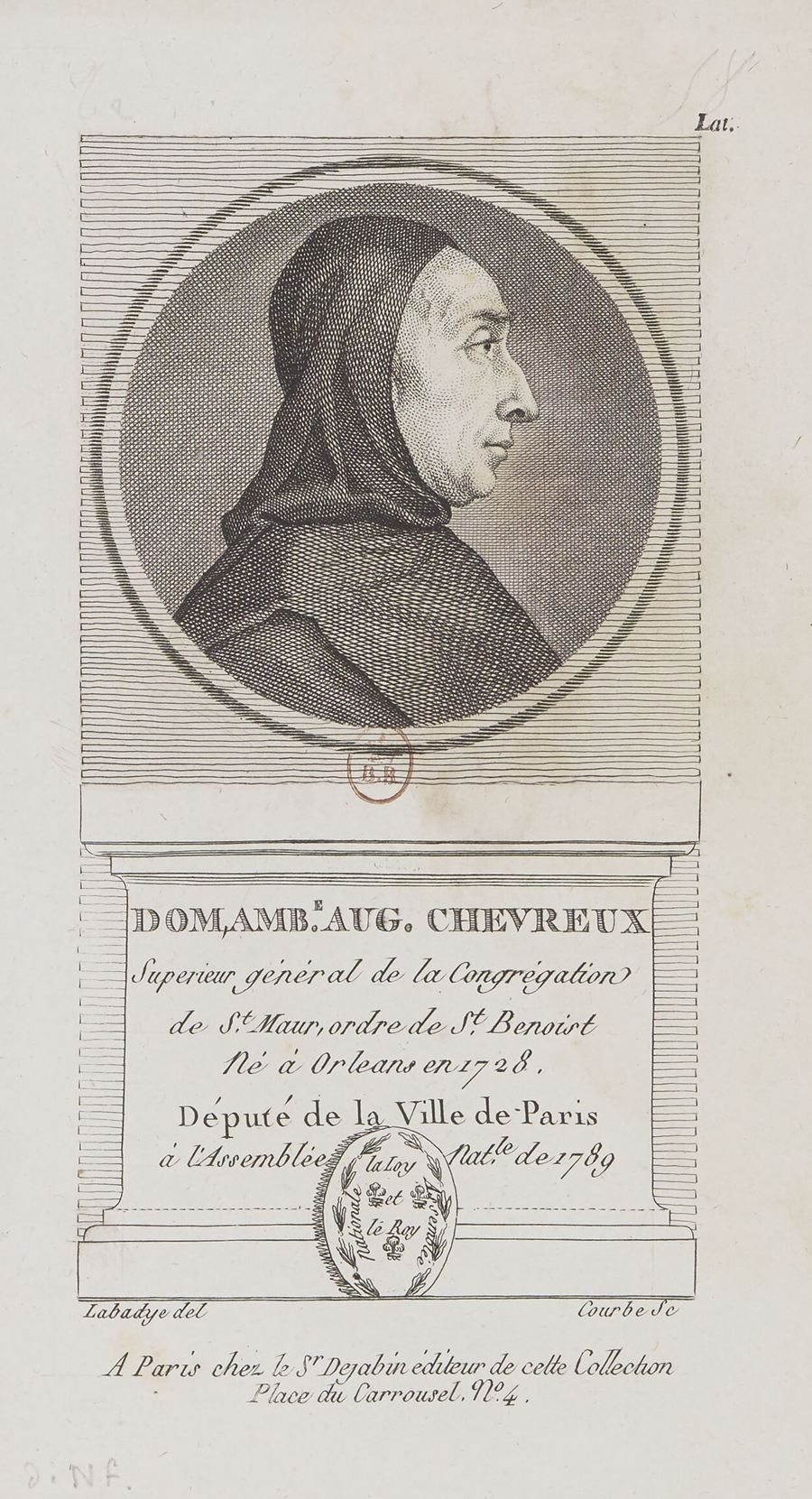
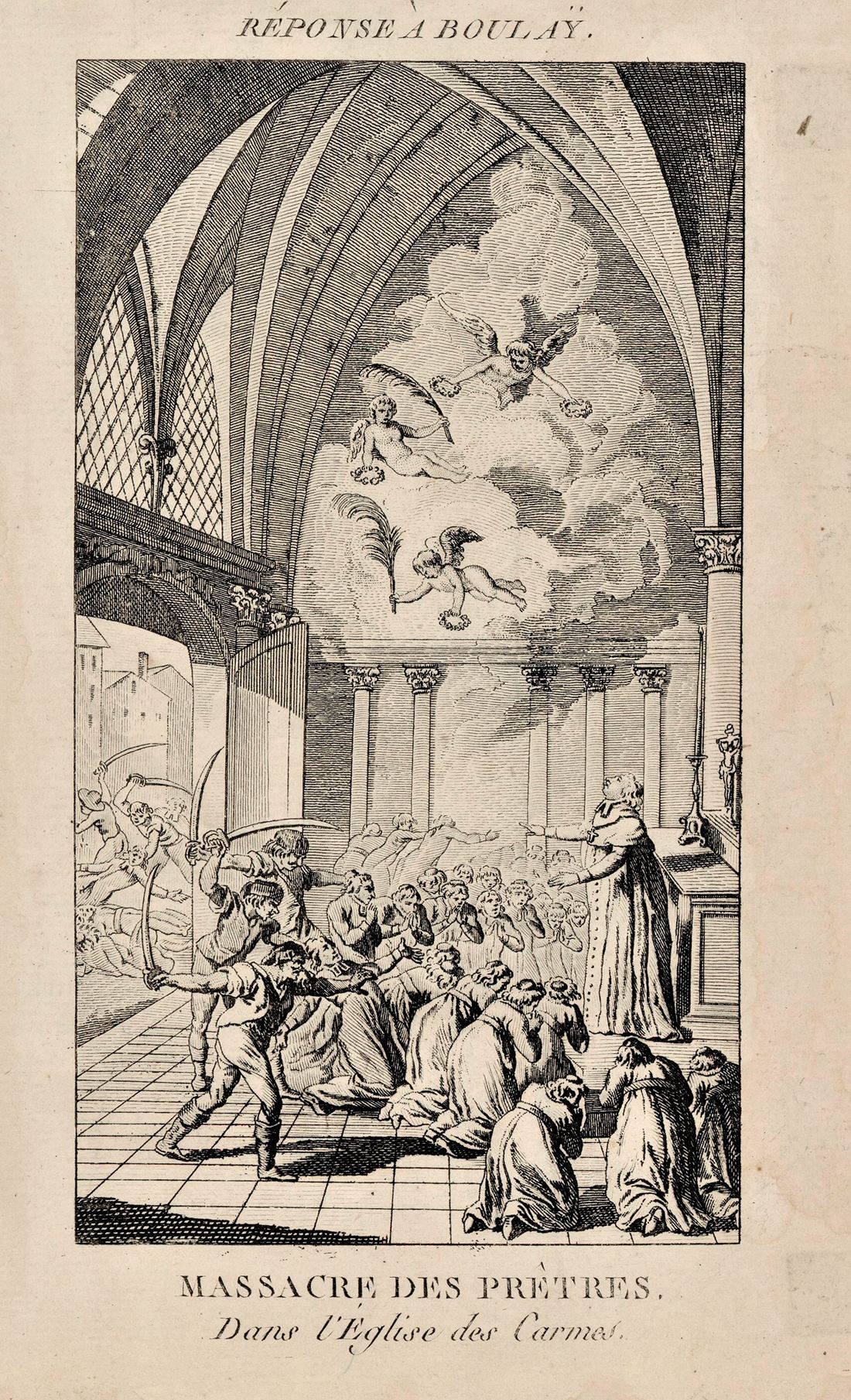
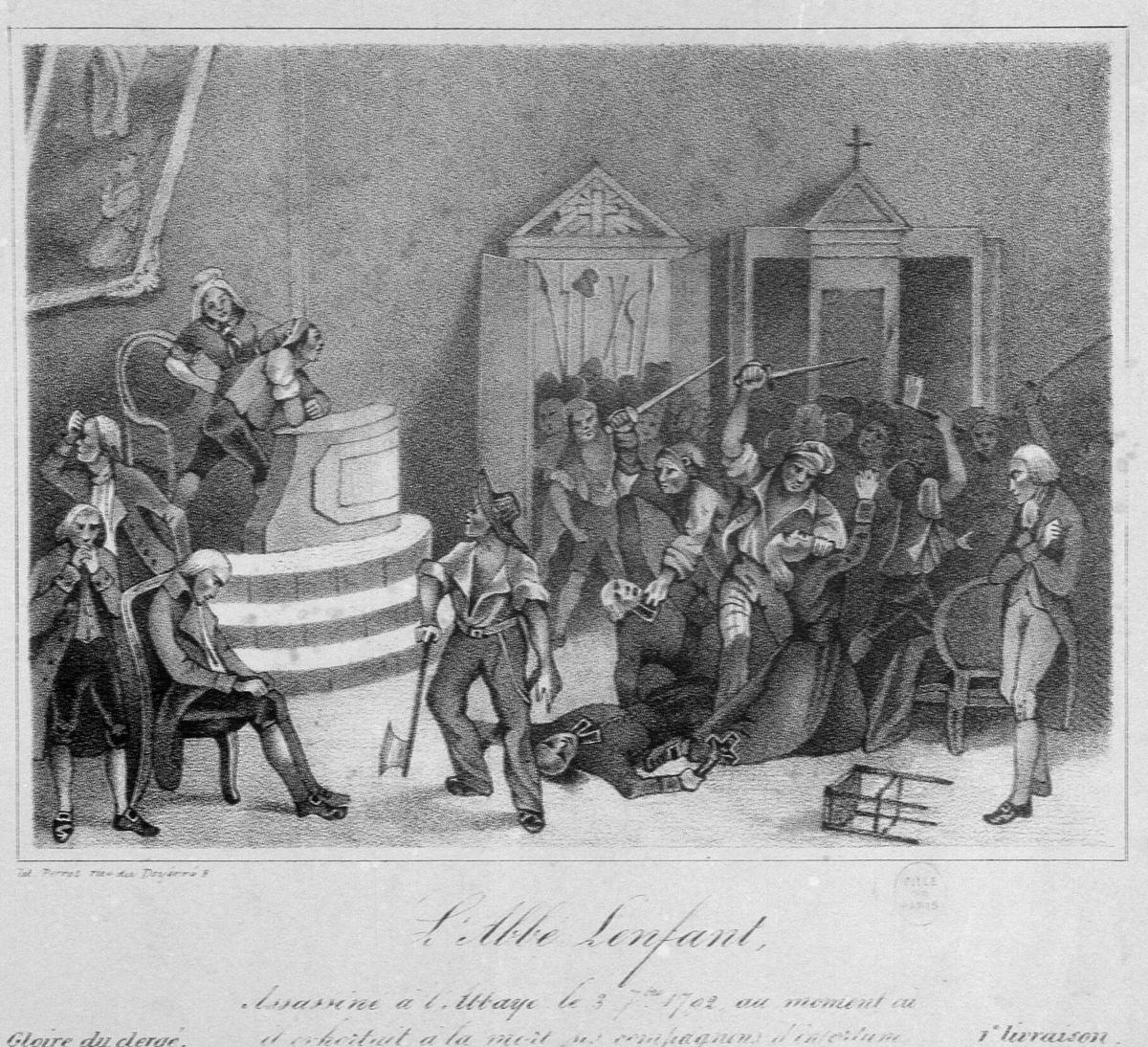
At the head of the Congregation then stood dom Ambroise-Augustin Chevreux, born at Orléans in 1728, elected superior general in 1783, and chosen in 1789 by the clergy of Paris as their deputy to the Estates General. He would not take the oath required of the clergy without expressly excepting what belongs to spiritual authority, and was thereafter held to be a refractory priest. Arrested after 10 August 1792 and shut up in the convent of the Carmes, he was killed there on 2 September 1792 with most of his fellow prisoners. He died a martyr, and the Church has acknowledged him as one: Pius XI beatified him in October 1926 among the hundred and ninety-one martyrs of September. Monks of the Congregation perished with him; others were dispersed, imprisoned or exiled.
PRO FIDE ET ECCLESIA
PAX
DOM CHEVREUX
ULTIMUS SUPERIOR GENERALIS
O. S. B.
For the faith and for the Church · Peace · Dom Chevreux · last superior general · of the order of Saint Benedict
Inscription on the altar of the chapel of Saint-Benoît, in the church of Saint-Germain-des-Prés, to the memory of the last superior general of the Congregation of Saint-Maur.
One word of that epitaph is the same as the word which, since Mabillon, crowns Maurist title pages and stands at the head of this site: PAX. The Congregation died under the word it had printed on its own books: PAX, given as an epitaph to a martyr.
The example of Solesmes
Forty years later a priest from Le Mans, dom Prosper Guéranger (1805-1875), bought back the priory of Solesmes, which was to have been pulled down. On 11 July 1833 he moved in with three companions. They had no congregation, no fortune and no guarantee: they had a house, a rule and some books. In 1837 the Holy See recognised the community, raised the priory to an abbey and made it the head of a Congregation of France; dom Guéranger became its first abbot.
Out of that fresh start came the revival of Benedictine life in France, the restoration of Gregorian chant, and a renewal of monastic scholarship. The lesson is short: an institution is not restored by decree, but by a place, a few men, and work taken up again.

Mutatis mutandis — with the necessary changes made
What dom Guéranger did for monastic life, the Conservatoire attempts, on its own scale and in its own order, for the scholarly and craft work of the Maurists. It does not re-establish a congregation: the Revolution dispersed it, and the Church alone could restore it. What it takes up again is a programme of work, in the very house where that work was carried on for a hundred and forty-five years.
| Solesmes, 1833 | Mas-Garnier, today | |
|---|---|---|
| The place | A priory bought back on the eve of its demolition. | A Maurist abbey kept from ruin, repaired one range after another. |
| The people | Four men, without means, around a rule. | Researchers, craftsmen, singers and trainees, around a method. |
| The work | The office, chant, liturgy, scholarship. | Sources, teaching, crafts, and Gregorian chant as a living practice. |
| Recognition | The Holy See, in 1837. | The universities, laboratories and public institutions that share in the work. |
| The nature of the work | A religious restoration, approved by the Holy See. | A work of study and craft, in a lay house that neither celebrates nor prescribes anything. |
“Otiositas inimica est animæ.”
Rule of Saint Benedict, chapter 48, Of daily manual labour — read the Rule
Idleness is the enemy of the soul.
Keeping the temporal
Under the Ancien Régime an abbey could be held in commendam: an abbot, often a stranger to the cloister, received its temporal goods and had to answer for them. Many of the houses the Maurists took over had suffered from that practice. By a singular turn, the abbey today is entirely lay: it is held by a lay commendatory abbot, who neither exercises nor claims any spiritual authority. The expression is a symbolic and personal designation; it founds no ecclesiastical office and carries no canonical recognition. His charge is only the walls, the land, the books and the memory of a house. He tries to keep the Maurist inheritance and to hand it on — not to an institution, but to everyone: for humanity.
This reserve is not indifference. Here it is the form that respect takes: what belongs to the sacred does not belong to those who keep its stones.
The Benedictine motto holds together what the world separates: study, prayer and the work of the hands.
A phrase from the Rule of Saint Benedict, in the chapter on the craftsmen of the monastery, which became the motto of the Order.
Emblem of the Congregation of Saint-Maur, engraved on its books and on the epitaph of its last superior general.
The Rule of Saint BenedictThe Congregation of Saint-MaurMaurist Mas-Garnier