
Saint-Maur
Maurist Mas-Garnier
Saint-Pierre Abbey, province of Toulouse, reformed in 1640.

No surviving document fixes a year of foundation for the monastery of Saint-Pierre du Mas-Garnier — also called the Mas de Verdun: the inventory of the departmental archives of Tarn-et-Garonne records only that it “was reportedly founded in the ninth century”, while the commune places it around 940. Its earliest secure attestation is a bull of Pope John XV of 993, confirming Garin, abbot of Lézat and of Saint-Michel de Cuxa, in the government of five monasteries, Mas-Garnier among them. The house was ruined by the Wars of Religion: in 1574 the monks were driven out and the abbey plundered and burned. Their return, in the following century, came under the sign of reform. The Congregation of Saint-Maur introduced its observance here in 1640 and attached the house to its province of Toulouse.
A house of the province of Toulouse
The province of Toulouse, sometimes called the province of Gascony, gathered some thirty houses from Bordeaux to Provence: Sainte-Croix at Bordeaux, where dom Bedos built one of his organs, La Daurade at Toulouse, Sorèze and its school, La Sauve-Majeure, La Réole, Saint-Sever, Lagrasse, Caunes, Aniane, Saint-Guilhem-le-Désert, Montmajour. Mas-Garnier holds its place among them, on the bank of the Garonne.
Mas-GarnierHouses of the province of Toulouse
The thirty-one houses of the province
The buildings
The Maurists raised a new church, then in the eighteenth century began a great scheme to rebuild the monastic quarters in Toulouse brick, which the Revolution interrupted. In 1790 the community was dissolved; the church was later demolished and part of the cloister destroyed. The ranges, the arcaded gallery and the grand staircase with its wrought-iron balustrade survive; they house the Conservatoire today.


The recovered plans
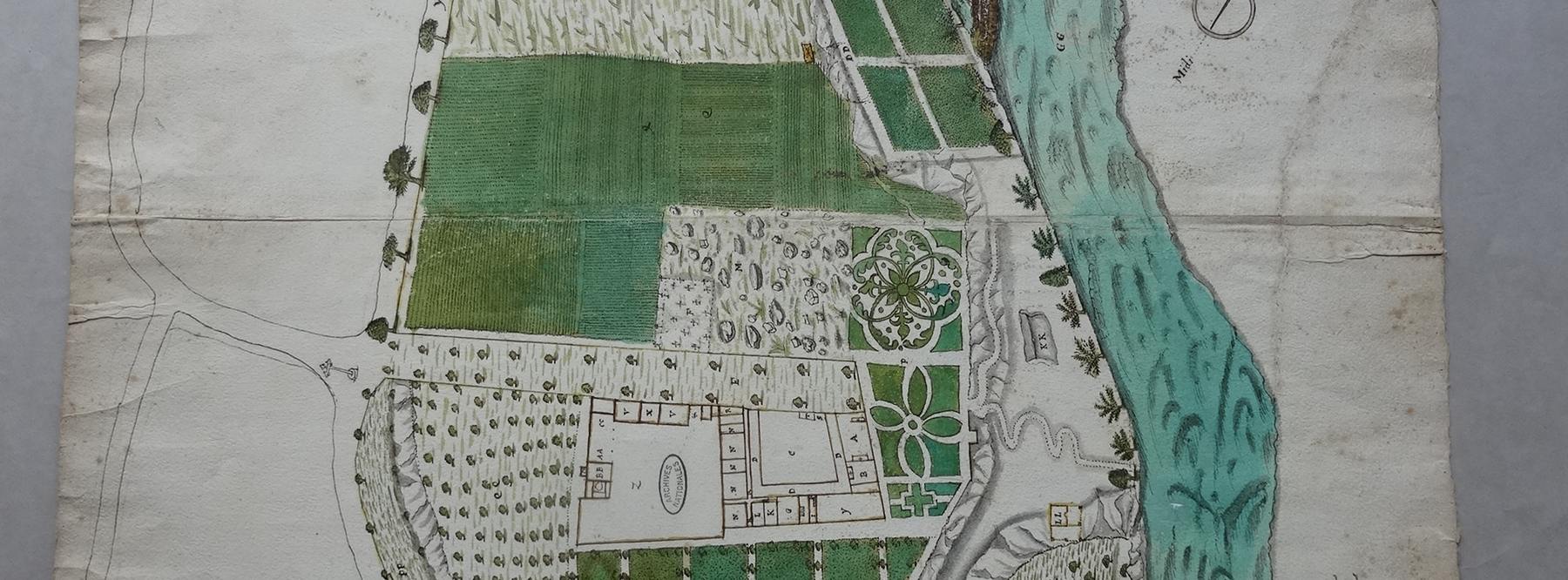
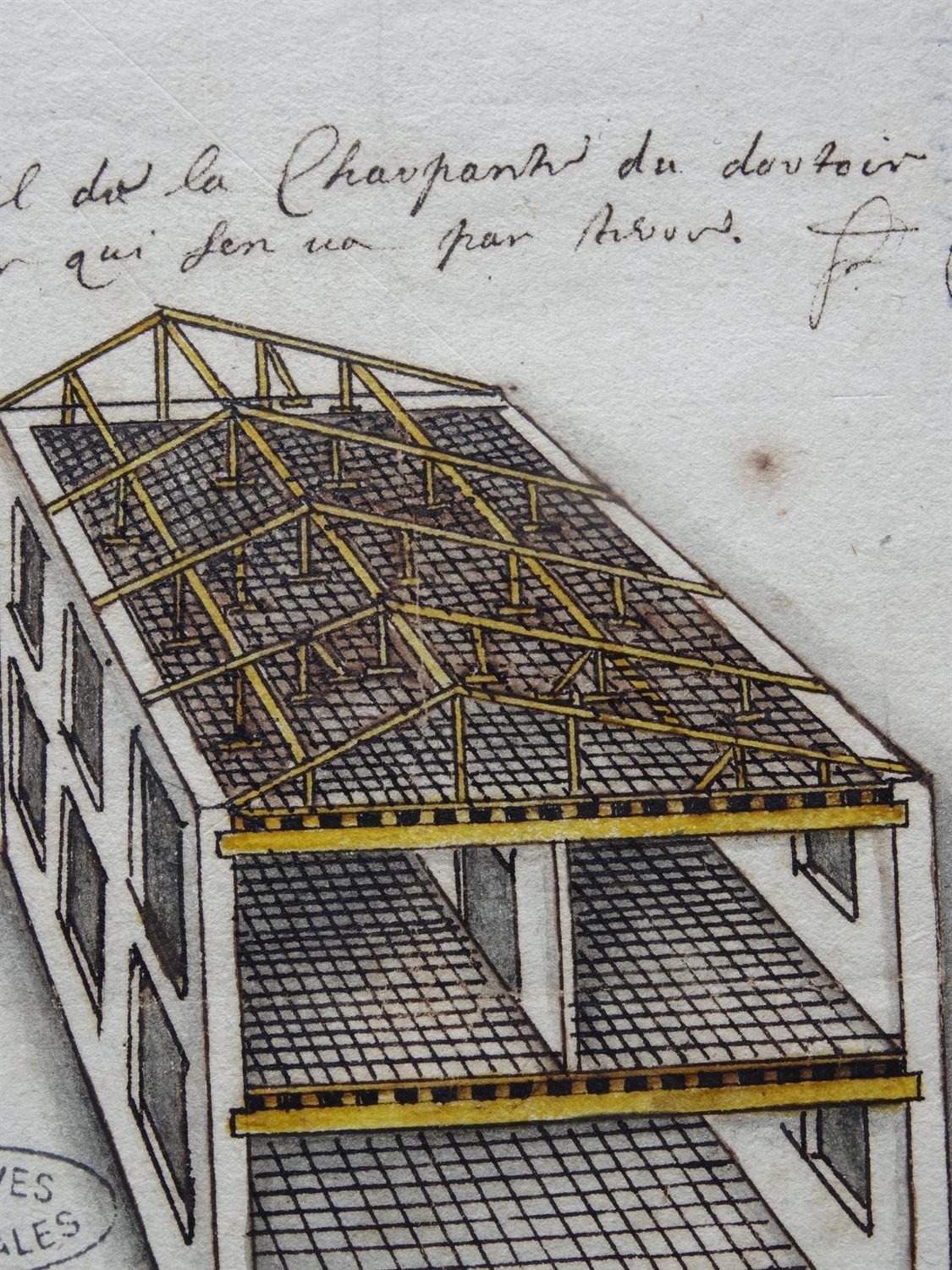
The plans drawn by the Congregation’s brother architects, seized in 1790, are held by the French National Archives. They make it possible to recover the demolished church and the vanished cloister.


The Maurist priors, 1645-1788
The general chapter appointed the priors for three years at a time. “P. S. G.” marks an appointment reserved to the Father Superior General; “Contin.” a prior continued in office.
- 1645 P. S. G.
- 1648 P. S. G.
- 1651 Dom Mathieu Solabel
- 1654 Dom Callixte Adam (adm.)
- 1657 Dom Raymond Pradeilles
- 1660 Dom Luc Bertrandie
- 1663 Dom Ambroise Fauchier
- 1666 Dom Pierre Ponthelier
- 1669 Dom J. François La Blanche
- 1672 Dom Michel Geoffroy
- 1675 Dom André Genest
- 1678 Contin.
- 1681 Dom Pierre Justes
- 1684 Dom Gabriel Bellordeau
- 1687 Dom Michel Geoffroy
- 1690 Contin.
- 1693 P. S. G.
- 1696 Dom Michel Geoffroy
- 1699 Dom André Genest
- 1702 Dom Paul Saporta
- 1705 Contin.
- 1708 Dom Jérôme La Févrière
- 1711 Contin.
- 1714 Dom Pierre Dordé
- 1717 Dom Claude Brun (adm.)
- 1720 Dom Marc Chalvet
- 1723 Dom Pierre Dordé
- 1726 Dom Étienne Verdeille
- 1729 Contin.
- 1733 P. S. G.
- 1736 Dom Étienne Verdeille
- 1739 Dom Pierre Aliquot
- 1742 Dom Jacques Roubian
- 1745 Dom Jean Bapt. Amoureux
- 1748 Dom Jos. Antoine Solabel
- 1751 Dom François Bernard
- 1754 Dom Paul Castel
- 1757 Dom Jos. Antoine Solabel
- 1760 Dom Théodore Banières
- 1763 Dom Jean Bapt. Bartet
- 1766 Dom J. Jacques Thomas
- 1769 Dom Jean Joseph Favier
- 1772 Contin.
- 1775 Contin.
- 1778 Dom François Duffault
- 1781 Dom Joseph Teurle
- 1783 Contin.
- 1788 Dom J. Joseph Bardet
After dom G. Charvin, “Contribution à l’étude du personnel de la congrégation de Saint-Maur (1612-1789)”, Revue Mabillon, 1956-1959.
The archives of the house
The archives of Mas-Garnier were dispersed in 1790, but the house left its trace in the papers of the Congregation and of the State. The plans drawn by the Maurist brothers in 1661 and 1679 are at the Archives nationales; the file gathered by the first historians of the Congregation for the Monasticon Benedictinum and the list of monasteries prepared for the Monasticon Gallicanum are at the Bibliothèque nationale de France. Other pieces shed light on the rebuilding of the abbey after the Wars of Religion and on its relations with the Reformed community of the town. The Conservatoire is continuing to survey them as part of its monograph on the house.
- III.D.1Mas-Grenier in the consistory archives (Archives nationales, TT 252)Archives nationales (record via FranceArchives), 1527-1685
File of the Reformed consistory of Mas-Grenier, with the conflict that set it against the abbey over the temple and the cemetery (1682-1683).
- III.D.2Decree of the Conseil privé ordering Montauban and Mas-Grenier to pay for the rebuilding of the abbey, 20 June 1634 (Bibliothèque Mazarine)Bibliothèque Mazarine (record via FranceArchives), 1634
A piece from a collection on Protestant affairs: the rebuilding of the abbey, ruined during the Wars of Religion, is charged to the consuls, on the eve of the arrival of the Maurists.
- III.D.3Documents on various French abbeys collected by Dom Le Michel, Chantelou, Mabillon (BnF, Latin 12777-12780) — including Mas-GarnierBibliothèque nationale de France, 17th c.
Survey files of the first Maurist historians on the abbeys; Latin 12779 contains, at folio 19, a piece on Le Mas-Garnier (Mas-Grenier).
- III.D.4Plans of the abbey of Mas-Grenier-lès-Verdun (Archives nationales, N III Tarn-et-Garonne 1/1-7)Archives nationales (record via FranceArchives), 17th c. (1661, 1679)
Seven plans drawn by Maurist brothers – Robert Plouvier (1661), Christophle Lachezelle (1679), Luc Laborie –: buildings, church, cloister, enclosure and the roof timbers of the dormitory. The key document for the built history of the house.
The research programmeThe recovered plansLibrary and archives