
Saint-Maur
The Congregation of Saint-Maur
1618-1790. A monastic reform, and a long labour of scholarship.

The Congregation of Saint-Maur was born in the wake of the Congregation of Saint-Vanne, which had reformed the Benedictine monasteries of Lorraine. Louis XIII authorised it by letters patent in August 1618; Pope Gregory XV approved it in 1621. The point was not to found new houses, but to reform ancient monasteries: Saint-Denis, Saint-Benoît-sur-Loire, Saint-Remi at Reims, Mont-Saint-Michel, Le Bec.
At its height, between 1680 and 1710, the Congregation counted more than a hundred and ninety abbeys and priories in six provinces: France, Normandy, Brittany, Burgundy, Chezal-Benoît and Toulouse. It was governed from Saint-Germain-des-Prés by a superior general and by a general chapter meeting every three years, which appointed to every office. A monk vowed stability not to a house but to the Congregation, and could therefore be sent wherever a scholarly undertaking needed him.
The office, the hand, the study
Maurist life rested on three pillars. The divine office, sung seven times by day and once by night. Manual work, “a regular exercise from which no one is exempt”, superiors included. And intellectual work, willed from the outset by dom Grégoire Tarrisse, superior general from 1630 to 1648, and organised by dom Luc d’Achery, librarian of Saint-Germain-des-Prés: every monk trained in the humanities, in Scripture, in the Fathers and in the principles of chant, with the ablest gathered in Paris for the great editions.
Every house was called upon. Circular letters set the programme and the method: Au sujet des mémoires qu’on demande pour composer l’Histoire de l’Ordre (1647), Méthode pour la recherche des manuscrits (1648). Each monastery had to inventory its charters, write its own history and keep its Livre des choses mémorables, its book of memorable things.
Building
The Maurists found abbeys ruined by war and by the commendatory system. They restored the medieval abbey churches in keeping with their style, going so far as to finish the church of Saint-Maixent in Gothic in the middle of the seventeenth century. The monastic quarters, by contrast, they rebuilt: large ranges, light and sober, set around the cloister, with a library, a grand staircase and long galleries. Brother architects, such as Guillaume de La Tremblaye, drew the plans of the monastic quarters. This is the architecture one sees at Mas-Garnier.
Saint-Germain-des-Prés, mother house of the Congregation
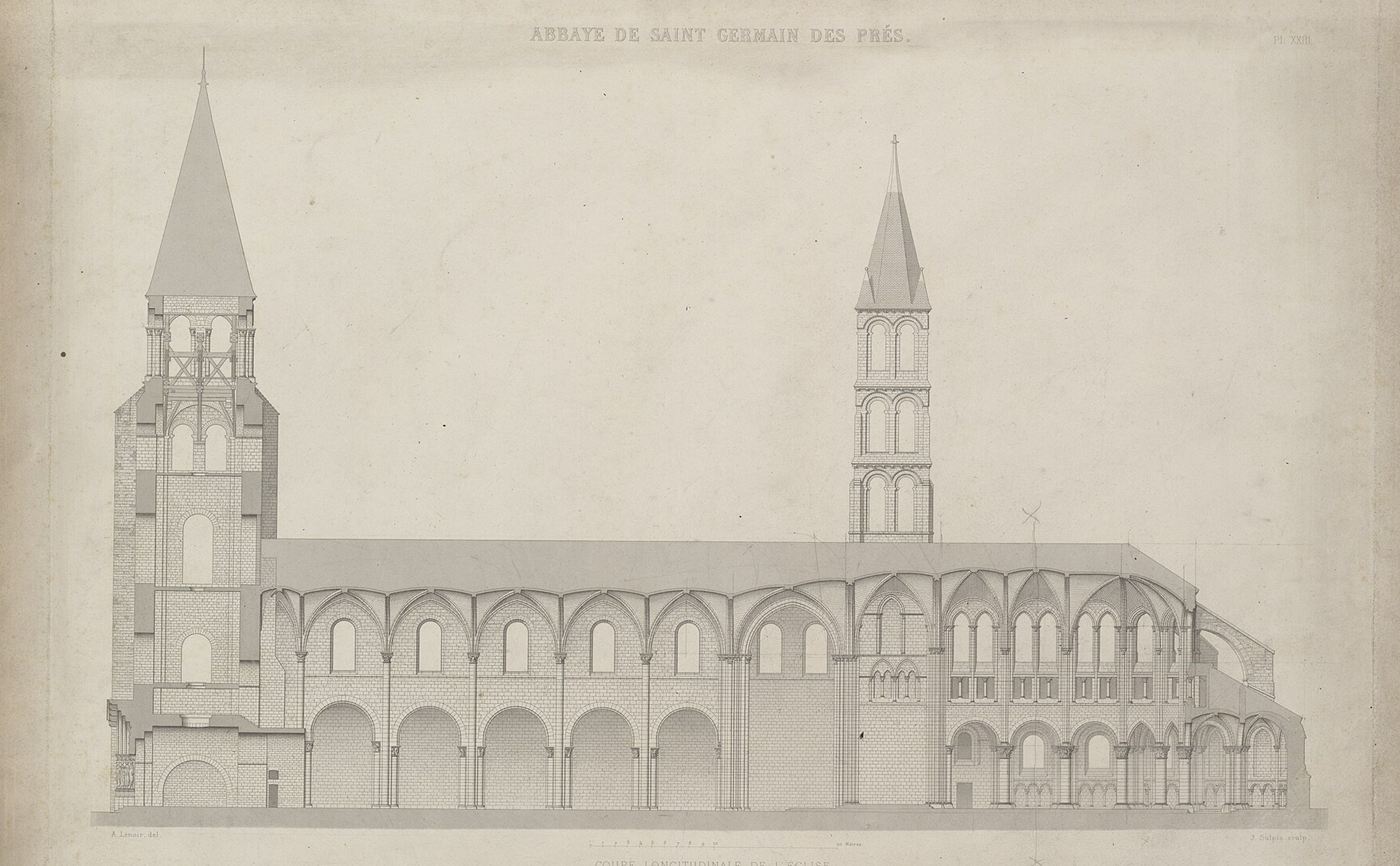
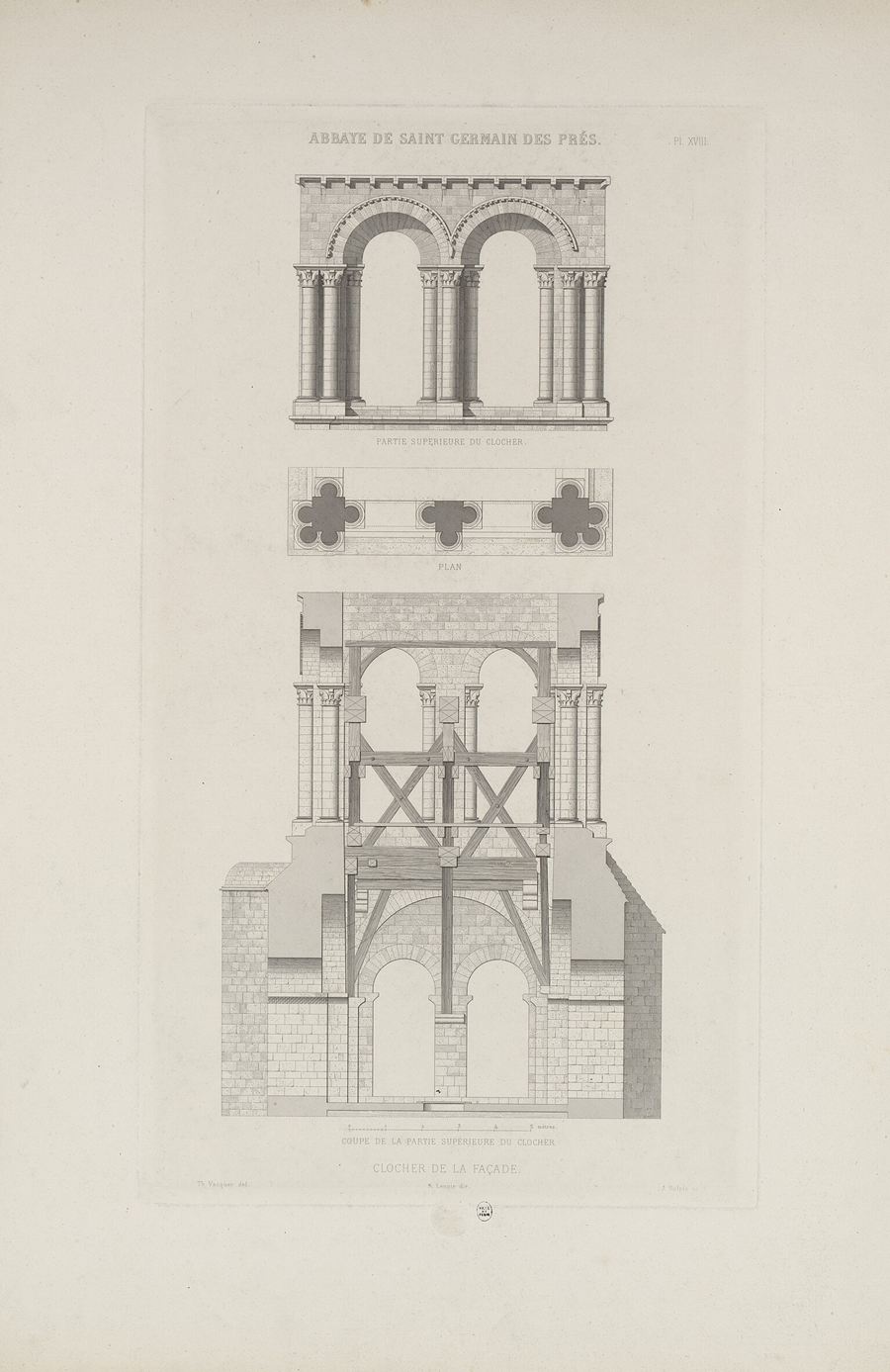
It was at Saint-Germain-des-Prés that the superior general and the great scholars of the Congregation lived, and where the general chapter met. The abbey church, one of the oldest in Paris, was restored by the Maurists before being seized at the Revolution; its precinct became a prison, and its name, “the Abbey”, became that of one of the sites of the September massacres of 1792.
The martyrdom of the Congregation
The end, and what remains
The National Constituent Assembly abolished monastic vows in February 1790. The communities were dispersed and the libraries seized. The last superior general, dom Ambroise Chevreux, died a martyr at the convent of the Carmes on 2 September 1792; the Church beatified him in 1926 among the martyrs of September: the martyrdom of the Congregation, and what was taken up again from it. The manuscripts of Saint-Germain-des-Prés today form one of the major collections of the Bibliothèque nationale de France. Several Maurist enterprises were taken over by the Académie des inscriptions et belles-lettres, which continues them.